
The Payday Path
About 15 minutes, plus hands-on activity and discussion.

Think about it
Have you ever done work and then wondered, “Okay, but how do I actually get paid?” In the last lesson, we talked about how family jobs show responsibility and how being faithful with them can lead to bigger opportunities, like paid jobs. But how do you and your parents keep track of all those jobs, how much they’re worth, and when you get paid?
That’s where The Payday Path comes in. It’s a system that makes the whole process clear and fair: which jobs are paid, when they should be done, how much they’re worth, and how payment is handled. This way, there’s no guessing, no arguing, and everyone knows what’s expected. And better yet, it’s mostly automated to save everyone time!
Note for Parents: It is recommended that parents read through this lesson. Your family may already have a working system in place for paid jobs management and payment, but you may get an idea from this lesson that you could use in the future.
Let’s Learn
Step 1: Make Your Paid Job List
You already started this in the last lesson when you wrote down your family jobs. Now, you and your parent can brainstorm a few paid jobs—things that are helpful for the household, but go beyond your everyday family responsibilities. Washing the car, mowing the lawn, vacuuming, or organizing a pantry could be paid jobs. We recommend starting with around five or fewer so you don’t get overwhelmed. Parents should make sure these jobs are achievable for your age and abilities, while also truly helpful for the family. Continue reading below for a list of ideas for paid jobs.
Household Cleaning

- Vacuum the whole house
- Mop floors
- Dust shelves, blinds, or ceiling fans
- Clean windows and mirrors
- Wipe down baseboards
- Clean bathrooms (sink, counters, toilet)
- Deep clean the kitchen (wipe cabinets, clean fridge, scrub stove)
- Organize pantry or cabinets
- Clean out the car
- Wash trash cans/recycling bins
Kitchen & Meals

- Wash dishes after meals
- Load/unload dishwasher
- Dry and put away dishes
- Wipe down counters and table
- Help prep vegetables or ingredients for dinner
- Set and clear the table
- Pack lunches for the next day
Outdoors & Yard

- Mow the lawn
- Rake leaves
- Water plants or garden
- Weed flower beds
- Sweep the porch/patio
- Pick up sticks or debris in the yard
- Wash outdoor furniture
- Shovel snow (if applicable)
- Pull weeds from sidewalk/driveway cracks
Pets & Animals

- Feed pets on schedule
- Walk the dog
- Brush pet’s fur
- Clean litter box
- Wash pet bowls
- Pick up dog waste in yard
- Refill pet water
Laundry & Clothing

- Sort laundry by colors
- Move laundry from washer to dryer
- Fold clean clothes
- Put away folded clothes
- Match socks
- Iron clothes
- Change sheets on beds
Organization & Household Help

- Take out trash and recycling
- Bring in mail/packages
- Sweep or vacuum stairs
- Declutter a playroom or closet
- Wipe fingerprints off walls/light switches
- Restock toilet paper or paper towels
- Clean out/organize drawers
- Help younger siblings clean their rooms
Car & Garage
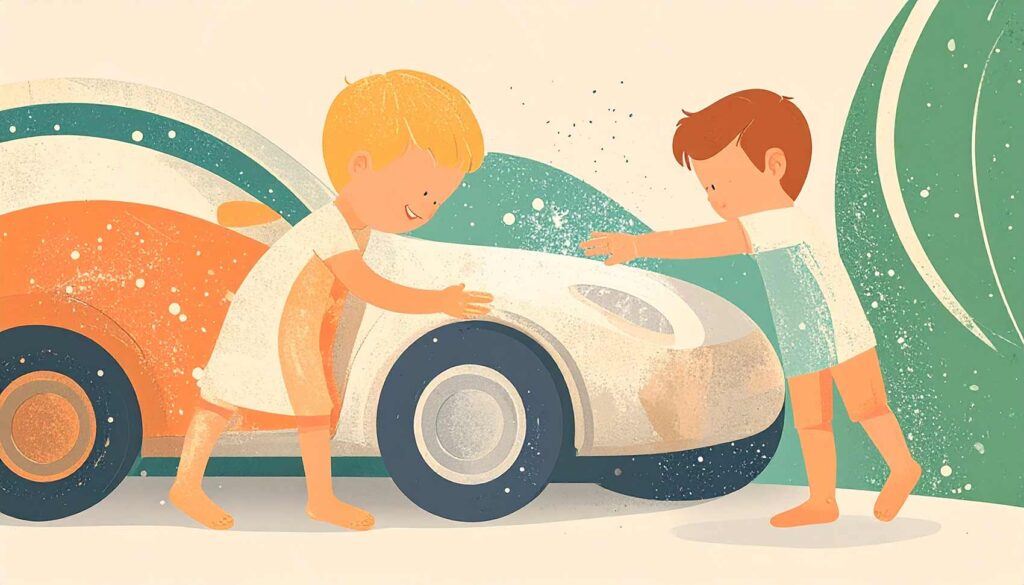
- Wash the car
- Vacuum inside the car
- Wipe dashboard and windows
- Help clean/organize garage
- Sweep garage floor
- Take out or bring in bikes/toys
“Extra Help” Jobs (Bonuses)

- Babysit younger siblings for short times
- Help a parent with a work project
- Carry in groceries and put them away
- Wash patio doors/sliding doors
- Help assemble furniture or toys
- Deep clean one room of the house (like a Saturday reset)
Tip for Parents: Start with 3–5 paid jobs that are both helpful to the household and achievable for your child’s age. You can rotate jobs, add more jobs, or add bonuses later to keep things fresh.
Step 2: Decide When the Jobs Should Be Done
Some jobs might be daily (like dishes or feeding a pet), while others may be once a week (like vacuuming and mopping floors). Parents and kids should talk together and set clear expectations about when and how the jobs need to be finished.
While family jobs can continue on weekends, it may be helpful to give kids a break from paid jobs on weekends. Adding paid jobs to days that may be filled with fun events like birthday parties and sports could be challenging.
Step 3: Choose a Way to Manage Jobs
Here’s where The Payday Path becomes powerful. We recommend using an app like Greenlight. With Greenlight, kids check off completed jobs and get paid digitally, no cash required. Parents can connect it to their bank account, making Saturday “Payday” quick and easy. Bonuses can also be added for extra help. Even better, you can assign percentages to each bucket, spending, saving, and giving, so kids are set up to begin learning how to steward their money.
Step 4: Remembering to Do the Jobs
One of the hardest parts? Actually remembering! Forgetting is normal, but there are ways to help:
- Tie jobs to a routine (like “feed the pets right after dinner”).
- Set reminders on a phone or smart speaker.
- Post a checklist where you’ll see it every day.
- Have a parent do a quick morning or evening review.
If you are using an app like Greenlight, kids can simply check the app for their list of jobs for that day at the time that is set aside for them to work on their paid jobs.
Step 5: How Much to Pay
So how much should kids earn? A simple method is to pay based on age—for example, $6 a week for a six-year-old, $12 a week for a twelve-year-old. Families can adjust this up or down depending on their budget or the difficulty of the jobs. What matters most is not the exact amount, but that kids learn the connection between work, responsibility, and money management.
Motivation Matters (and Money Helps)
So far, we’ve talked about how much kids might earn through paid jobs each week. But there’s something just as important to think about, motivation.
Studies show that only about 11% of adults say money is their primary motivation at work. In other words, while pay matters, most people are driven by other things like enjoying what they do, feeling capable, or making a difference. That’s good news for families because it means paid jobs don’t have to be only about earning money, they can also nurture responsibility, integrity, and pride in a job done well.
Still, paying kids for work can be a powerful motivator, especially when connected to a clear system like The Payday Path. They will begin to learn the value of work and see results from their effort as their four buckets get filled. It helps them learn that effort leads to rewards, and when the system is fair and consistent, daily responsibility becomes easier to stick with.
Step 6: Stewarding Your Pay
Greenlight (and similar tools) makes it easy to divide money into Spending, Saving, and Giving buckets automatically. Here’s a simple starting breakdown for kids and teens:
- Spending: 60% (fun things, snacks, toys, small purchases)
- Saving: 30% (larger items you want later, and eventually investments)
- Giving: 10% (to church, causes, or people in need)
Each child also receives their own debit card that connects to their Greenlight account. For kids, it’s a safe way to practice real-world money management as you can choose times when they have the opportunity to swipe their card for purchases, track balances, and learn the responsibility of using money wisely.
Kids can see their savings build up over time, and parents can even help move some of that money into investments. We’ll discuss investing in a later lesson. The savings that your child starts now could grow into money they use to buy their first car, or even a down payment for a home in their twenties. Imagine that! They’ll want to spend it, but don’t let them. Let it grow… ideally until they turn 18.
And here’s the really fun part, giving! As this bucket grows, your child gets to experience the joy of helping others. Even though their money is digital, you can keep some cash on hand so they can physically give to church or someone in need. Later, simply reimburse yourself from your child’s account in Greenlight.
Note for Parents: Greenlight and similar apps charge one flat monthly fee. Greenlight is $6/m and covers up to 5 in your family. This makes it much more affordable than paying separately per child, especially if you’re managing jobs and payments for multiple kids. If you view it as an investment in your children, it’s a small price to pay. If it doesn’t work for you, you can cancel at any time.
Note for Parents: Alternatives to Greenlight
If your family prefers not to use Greenlight or a similar app, there are other ways to manage job payments. One option is to open a bank account for your child at a local bank or credit union and set up a weekly or monthly transfer from your account to theirs. This won’t automatically adjust pay based on job completion, but it still avoids the hassle of handling cash and helps kids learn what it’s like to have a real bank account. Another option is the traditional cash method, paying kids in bills or coins at the end of the week. This can be helpful for younger children who benefit from seeing and touching physical money, but it can become cumbersome to keep the right bills on hand and to split money into spending, saving, and giving categories. Whichever method you choose, the most important thing is feasibility, consistency, fairness, and connecting the payment to the child’s effort and responsibility.
The Big Picture
The Payday Path isn’t the only method out there, but it’s a clear, effective way for families to manage jobs and money while building responsibility and trust. It’s also about more than just money, just like this Money Explorers course. It’s about building responsibility, trust, and good habits. Parents commit to being consistent, kids commit to integrity and effort, and together you create a clear and fair system that helps the whole family.
Words to Know
Payday is the day you receive money for the work you’ve done.
Fair pay is an amount of money that matches the difficulty and effort of a job.
Let’s Play!
Memory Game
Instructions: Click to reveal jobs from the lesson and find all 8 matches.
Bible Time
“But everything should be done in a fitting and orderly way.”
—1 Corinthians 14:40
God cares about order and fairness, even in the little things. When our homes run in an orderly way, like having a clear plan for jobs and payments, it helps everyone know what’s expected. The Payday Path is one way to bring order to family jobs, making sure kids and parents both understand the system. Order brings peace, fairness, and trust, which is exactly what God wants for our homes.
With Your Grown-Up
If a grown-up or parent is nearby, spend a minute to discuss one or more of these topics.
Hands On
Today’s activity is about beginning your family’s system for paid jobs. You don’t need to have it all figured out in one day! Start the process together, and add pieces when it makes sense for your family. The important part is taking the first step toward a clear and fair plan.
The downloadable file is a printable PDF with the steps described in this lesson.
What we Learned
Having paid jobs teaches responsibility and shows how effort leads to rewards. An organized system helps keep things fair and clear, while giving you the chance to practice managing money by spending, saving, and giving wisely.
Check Your Understanding
High-Five!
Hit play for your end-of-lesson video!