
Give With Joy
About 17 minutes, plus hands-on activity and discussion.
Think about it
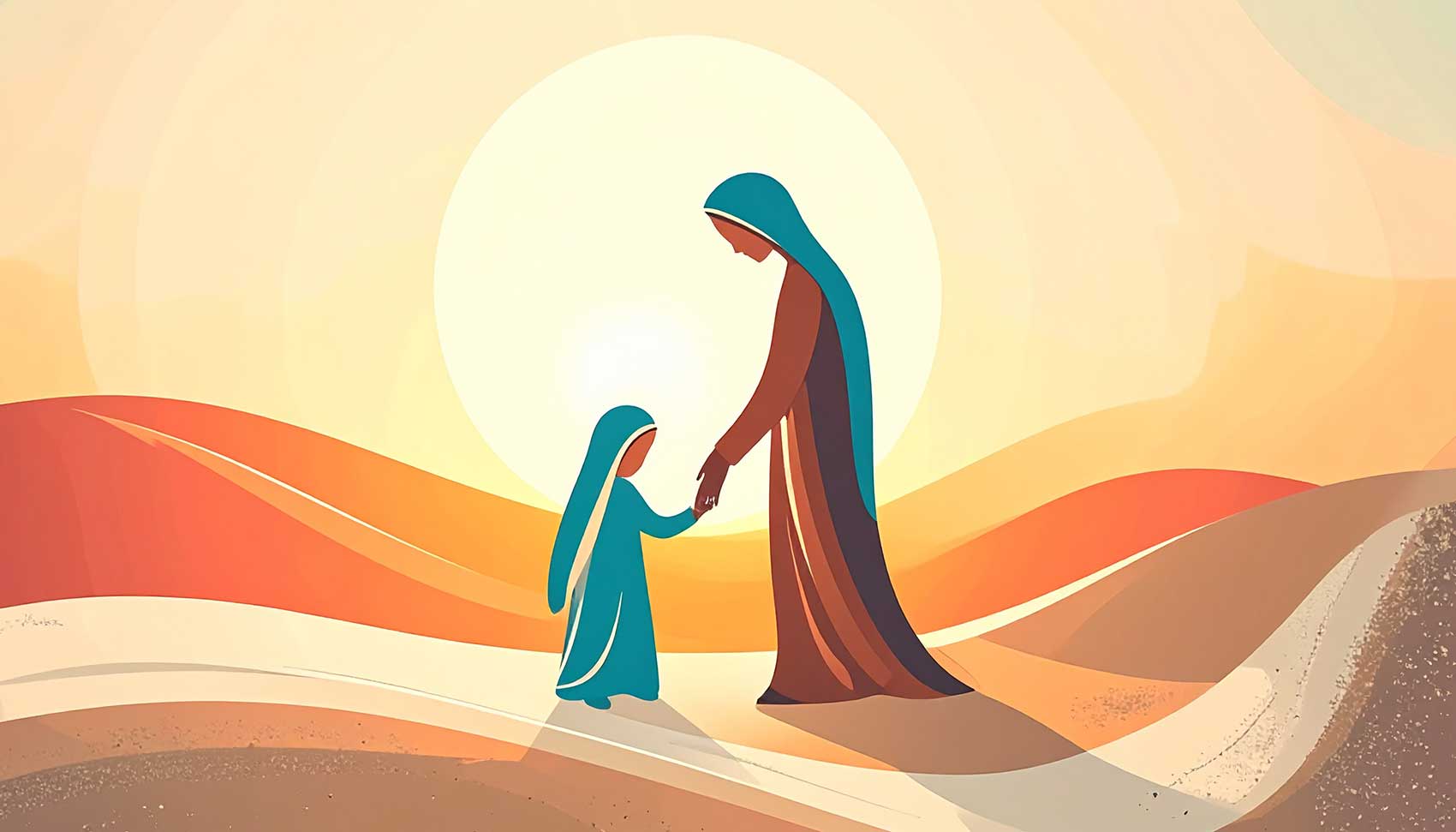
Have you ever noticed how giving makes your heart feel lighter? Maybe you shared your snack with a friend, or gave a gift to someone you love. Giving is like planting a seed. When you plant kindness, it grows into fruit like joy, love, and hope in the lives of others.
When we give, we reflect God’s heart, because He is the greatest giver of all. In this lesson, we are going to see why giving matters, both in the Bible and in our world.
Let’s Learn
Mother Teresa’s Life of Giving
Let’s start today’s lesson with a true story about a very special person.
A long time ago, in a small town in Europe called Skopje, a little girl named Agnes was born. Her family loved God, and her mother often told her, “Never forget the poor. Always share what you have.” Agnes grew up listening to these words, and they sank deep into her heart.
As she grew older, Agnes felt God calling her to give her whole life to Him. She became a nun and took a new name: Teresa. When she was still young, she moved to a faraway country, India. The city she lived in, called Calcutta, was full of noise, color, and people. But it was also full of poverty. On the crowded streets, Teresa saw children who were barefoot and hungry, mothers who had no food to give their babies, and sick people lying alone with no one to care for them.
Teresa’s heart ached. She couldn’t just walk past. She believed that every person, no matter how poor or sick, was precious to God. So, she started small. She picked up people who were sick and dying from the streets and carried them to a place where they could be washed, cared for, and loved. She gave them dignity in their final days when the world had forgotten them.
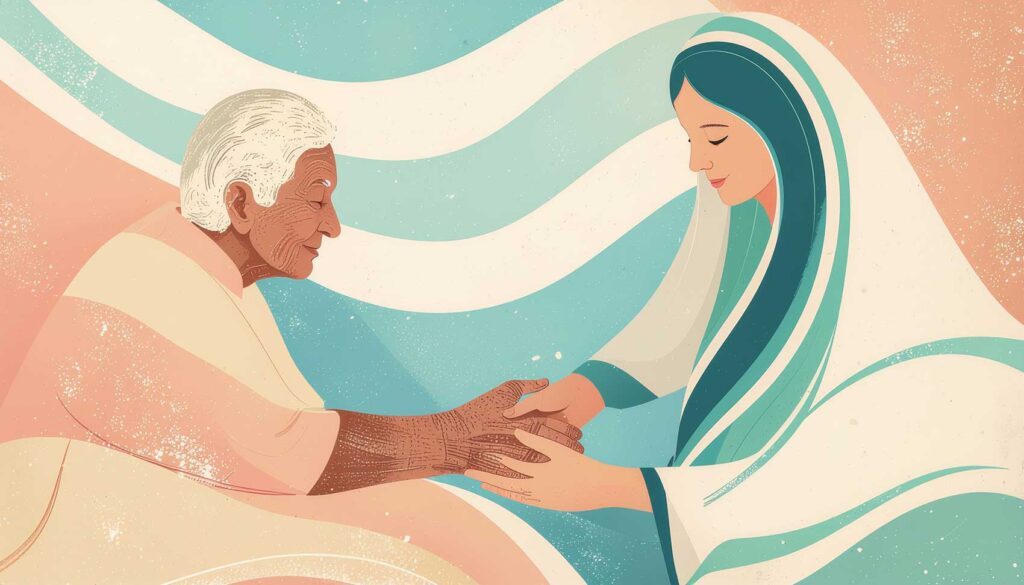
As time went on, Teresa gathered other women to join her. They wore simple white saris with blue stripes and became known as the Missionaries of Charity. Together, they opened homes for orphans so that abandoned babies could grow up loved and safe. They opened houses for people with leprosy, a disease that often caused others to reject them. Teresa called these places “villages of peace,” where people could be healed and know that they were loved.
Mother Teresa herself lived very simply. She didn’t own fancy clothes, or jewelry, or even a comfortable bed. She ate the same simple food as the poor she served. But she was rich in love. She once said, “Not all of us can do great things. But we can do small things with great love.”
Because of her cheerful giving, the world took notice. People from all over came to help her. She was given awards and honors, even the Nobel Peace Prize. But when she was asked about these awards, she always said, “I am just a little pencil in the hand of God, writing a love letter to the world.”
Mother Teresa spent her life showing that giving doesn’t always mean money. It can be time, kindness, or care. She showed that when we give unselfishly and with joy, even the smallest acts of love can change the world.
Why Giving Matters
Stories like Mother Teresa’s remind us that giving makes a difference. Today, we can see this in our own world. In America alone, people gave nearly five hundred billion dollars to charities in 2023. What’s amazing is that most of this didn’t come from big companies but from families and individuals.
Charities are organizations that help people in need. They might provide food for the hungry, build homes for families, send medicine to sick people, or care for children without parents. Charities are groups of people who work together to make life better for others, usually using donations of money, supplies, and time.

Around the world, some of the most generous countries aren’t the wealthiest. Many times, people who have less give more freely because they understand how important sharing is. Giving doesn’t just help those in need, it also changes us. Studies show that giving actually makes people happier and healthier, because we were created to be givers.
The Widow’s Mite
The Bible gives us another example of giving in the story of the widow’s mite. A mite was a very tiny coin used in Bible times. It was made of copper and was worth almost nothing, even less than a penny today.
Jesus sat near the temple treasury and watched as wealthy people dropped in large amounts of money. Then a poor widow quietly gave two tiny coins. To many, her gift seemed small, but Jesus told His disciples that she had given more than anyone else. She gave all she had to live on.

Her story reminds us that God doesn’t measure gifts by their size. He looks at the heart behind the giving. A small gift given with love and trust in God is greater than a large gift given with pride.
In Matthew 6:3–4, Jesus said, “But when you give to the needy, do not let your left hand know what your right hand is doing, so that your giving may be in secret. Then your Father, who sees what is done in secret, will reward you.”
This means that when we give, we shouldn’t do it to show off or to get attention from others. Instead, our giving should come from love and a desire to please God, not from wanting people to notice how “good” we are. It’s like giving quietly, almost as if even one hand doesn’t know what the other is doing!
Giving from the heart
In the Old Testament, the Israelites gave a tithe of their income and food crops to the temple. Tithe means “one-tenth.” In the Bible, a tithe was giving one-tenth (10%) of what you earned or grew.
in the New Testament, after Jesus came, the focus shifted to the attitude of the heart. The early church was encouraged to give generously and cheerfully. This shift in the New Testament doesn’t mean we shouldn’t give to our church, like the Israelites gave to the temple. It means that giving is about responding to God with a willing and generous heart. For some, that may still look like giving a tenth. For others, it may look different in different seasons. What matters most is that our giving is done with joy, trust, and a desire to honor God and support His work.
Instead of asking, “How much of my money should I give to God?” we could instead ask, “Since all of it belongs to God, how much of His money should I keep for myself?”
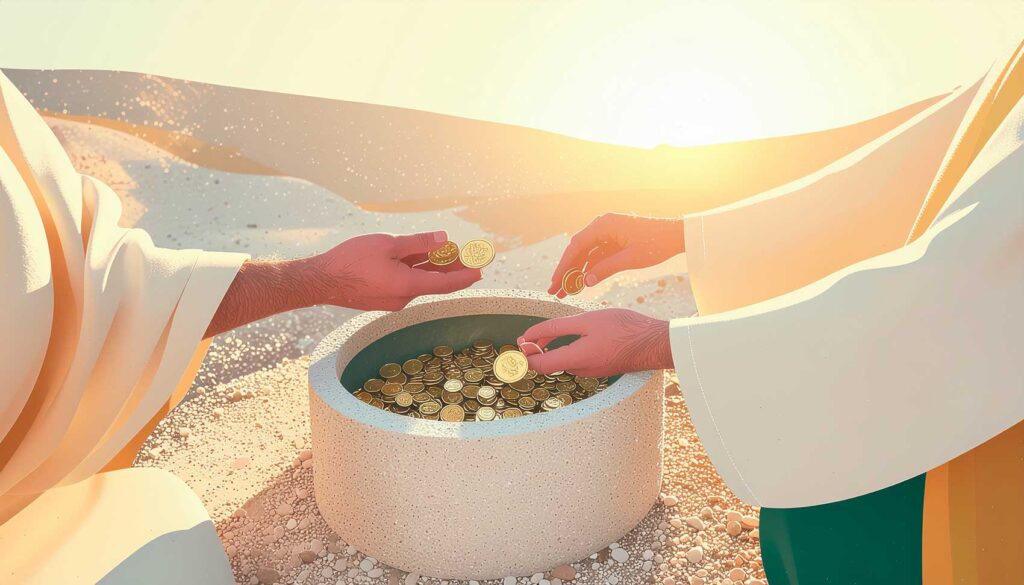
For the Israelites, the tithe was a way of practicing good stewardship. Their giving celebrated God’s goodness by thanking Him for His blessings, acknowledged His ownership of everything, helped maintain the temple so worship could continue, and provided for the poor. Giving in this way reminded them daily that all they had came from God.
For us as followers of Jesus, stewardship still means living with that same heart. We give joyfully because everything belongs to God, and giving is our way of saying “thank you” and joining Him in caring for others.
When Do I Give?
You might wonder, when should I give? The answer is that we give when we see a need and we feel like God is nudging us to help. Giving is something we do with prayer and wisdom, not because we feel pressure from others.
While you are still living in your family home, it’s important to always run your giving ideas by your parents first. They can help you decide if it’s the right time and place to give. Remember, you can’t meet every need all the time. That’s why the giving basket in the Payday Path is so helpful. It sets aside money just for this purpose.

Consider giving from your giving basket for now. There might be special times when you and your parents decide to give extra, but for now, it’s helpful to practice staying faithful to what you’ve already set aside. This way, giving becomes a joyful habit that honors God and blesses others. Remember, you have needs too. While you may sometimes give more than you set aside to give, it is important to be able to take care of your needs.
When We Should Consider Not Giving Money
God wants us to care for our families first. If giving money would mean we can’t pay our bills or provide for our family’s needs, then it may not be the right time to give money to others. The Bible says in 1 Timothy 5:8, “Anyone who does not provide for their relatives, and especially for their own household, has denied the faith and is worse than an unbeliever.”
This means that taking care of our family, and ourselves, is part of honoring God. In times when we don’t have much money, we can still give in other ways through kindness, prayer, encouragement, and helping with our time. God sees those gifts too, and they bring Him joy.
At the same time, it’s important to always remember that God does want us to be generous people. If something is getting in the way of us being able to give, that’s a signal to take a closer look at our finances, trim back unnecessary expenses and work toward stability, so that when we do give, we can do it with joy and freedom.
Learning to Receive
We’re talking a lot about giving because giving is important. But with every gift, there is someone who receives the gift. Receiving is important too! Sometimes it can feel hard to accept a gift or help from someone else. We might feel embarrassed, shy, or even worry that we don’t deserve it. But receiving is part of how God designed us to live in community. When we receive a gift, we allow someone else to experience the joy of giving. A simple “thank you” is often the best response.
Asking for Help
Generosity isn’t a one-way street. In fact, giving always involves a giver and a receiver. Sometimes God calls us to give, and sometimes He calls us to receive.
Both are part of His good design.
It’s also okay, even wise, to ask for help when you need it. Everyone goes through seasons of struggle, and God often provides for His people through the generosity of others. That means there will be times when you are the one helping to meet someone else’s needs, and other times when God will send someone to meet your needs.
Receiving is not weakness, it’s humility. When we allow others to give to us, we are letting God work through their kindness, just as He might one day use us to bless them. Asking for help creates a circle of love and care in the body of Christ.
Joyfully give, joyfully receive!
The Payday Path
Don’t forget, the Payday Path includes a giving basket. Each week, some of your payment can be added here, giving you the chance for your giving basket to grow so you can share what you’ve earned with others.
Words to Know
Charities are groups or organizations that work together to help people, often by using donations of money, food, or supplies.
A tithe is a word that means “one-tenth,” and in the Bible God’s people gave one-tenth of what they earned or grew to the temple.
A donation is something you give freely, like money, food, clothes, or time, to help someone in need or to support a cause.
Let’s Play!
Flip the Card
Instructions: There are 5 scenarios below. Flip each card to see how we can learn from all 5 unique giving scenarios.
Bible Time
“Each of you should give what you have decided in your heart to give, not reluctantly or under compulsion, for God loves a cheerful giver.”
—2 Corinthians 9:7
This means we shouldn’t give with a grumpy attitude or because someone is forcing us. Reluctantly means doing something even though you don’t really want to. Compulsion means being pressured or forced to do something. God wants us to give freely and with joy, because we love Him and want to help others.
Jesus showed this in the story of the widow’s mite. While many rich people gave large amounts, a poor widow gave two tiny coins, which was all she had. Jesus said her gift was greater because it came from her heart.
God cares about why we give. He is pleased when we give cheerfully and trust Him with what we have.
With Your Grown-up
If a grown-up or parent is nearby, spend a minute to discuss one or more of these topics.
Hands On
Put learning into action! Download the activity and dive into a fun, practical way to explore today’s lesson.
What we Learned
Today we learned that God’s instruction to us to give is not as much about how much we give, but more about the heart we give with. God loves it when we give cheerfully, whether it’s money, time, or kindness. Everything we have belongs to Him, and when we give with joy, we get to join Him in blessing others.
The basket we will learn about next is so important, there are two lessons devoted to learning about it. It is the fourth and final basket you will learn about in this course. This very important basket is the investing basket.

Check Your Understanding
High-Five!
Hit play for your end-of-lesson video!