Quick answer: You can teach responsibility with paid chores, an allowance or a combination. Decide which tasks are normal family contributions and which are optional paid jobs. If you give an allowance, explain its purpose and what your child must manage with it. Clarity and consistency matter more than choosing a single perfect system.
Separate belonging from earning
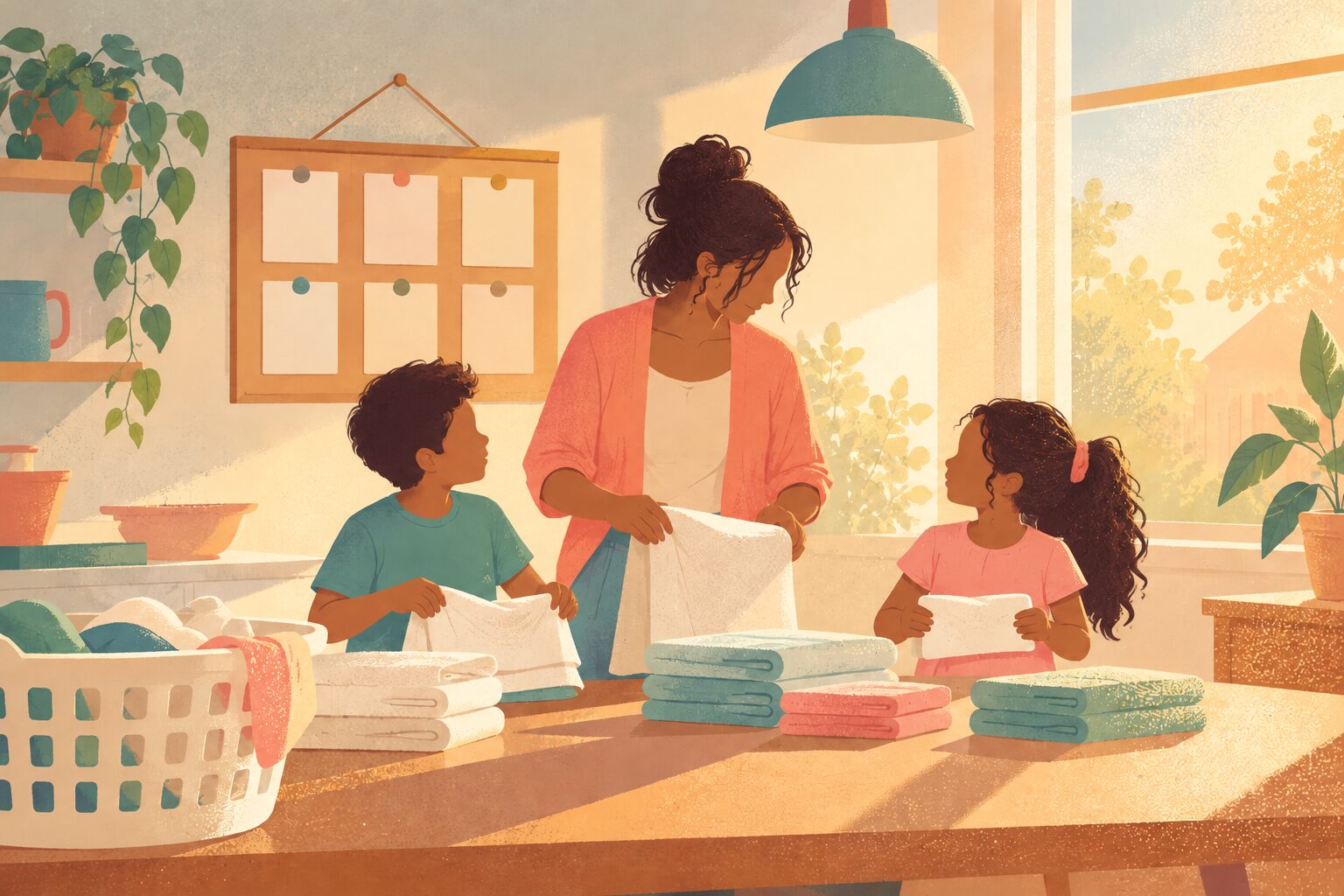
Families depend on shared effort. Putting away personal belongings or helping clear the table can be part of belonging to the household, rather than a service that always earns payment. Children need to understand that other family members contribute too, often without being paid.
Optional extra jobs can introduce earning. A child might help organize a cupboard or complete another safe task beyond routine responsibilities. Agree on the work and payment before the job begins. Make sure the child knows how finished work will be checked, so payment does not become a surprise negotiation.
Decide what an allowance is meant to teach
An allowance can provide regular practice in managing a limited amount. It does not have to be a reward for every household task. Tell the child what they are responsible for buying and what adults will continue to provide. Without that agreement, the money may become a stream of extras rather than a chance to make decisions.
Another family may connect some or all money to work. That can be workable too, provided expectations are realistic and payment is reliable. Avoid repeatedly changing rules after a child has completed the agreed task. Keeping your side of an agreement models the integrity you want to teach.
A combined approach can make the distinction clear
You might keep a short list of unpaid family contributions, offer a modest practice allowance and create a few optional paid jobs. This separates three ideas: we contribute because we are family, we practice managing resources, and we can earn through additional work.
That arrangement is not a requirement, and it may not fit your budget. You can teach the same ideas with occasional gift money and shared decisions. Choose a system you can sustain, then review it when your child’s age or responsibilities change.
Use disappointment as a small learning opportunity
If a child spends all their available money immediately, discuss what happened without shaming them. A missed optional purchase can teach the value of planning. Continue providing necessities and care; the consequence should match the practice decision.
Ephesians 4:28 connects honest work with having something to share. Use that wider purpose when you pay kids for chores: doing useful work, keeping promises and considering others. Earning is a practical lesson in service as well as money.
Write a simple household agreement
Make two lists together: ‘Family contributions’ and ‘Optional paid jobs.’ Choose just a few tasks for each. For one paid job, write the expected result, agreed payment and payment day. Ask your child to explain the agreement back to you. Review how it worked after a week and adjust anything that was unclear.
Keep Learning Together
Explore how children can earn money at home, or financial literacy activities for kids at home.
The Money Explorers course includes lessons about work, integrity and earning at home. Try the free sample to explore the family approach. Try the free sample lesson or view the Money Explorers course.
Frequently Asked Questions
Should every chore earn money?
It does not need to. Families can distinguish shared responsibilities from optional extra work. Explain the distinction before assigning the tasks.
What if my child refuses unpaid chores?
Return to the family agreement and use age-appropriate parenting boundaries. Avoid renegotiating payment every time a normal responsibility comes up.
Can children learn earning without a weekly allowance?
Yes. Occasional paid jobs can show the connection between useful work and payment, while gift money and pretend budgets provide management practice.