
Family Life Around the World
About 16 minutes, plus hands-on activity and discussion.
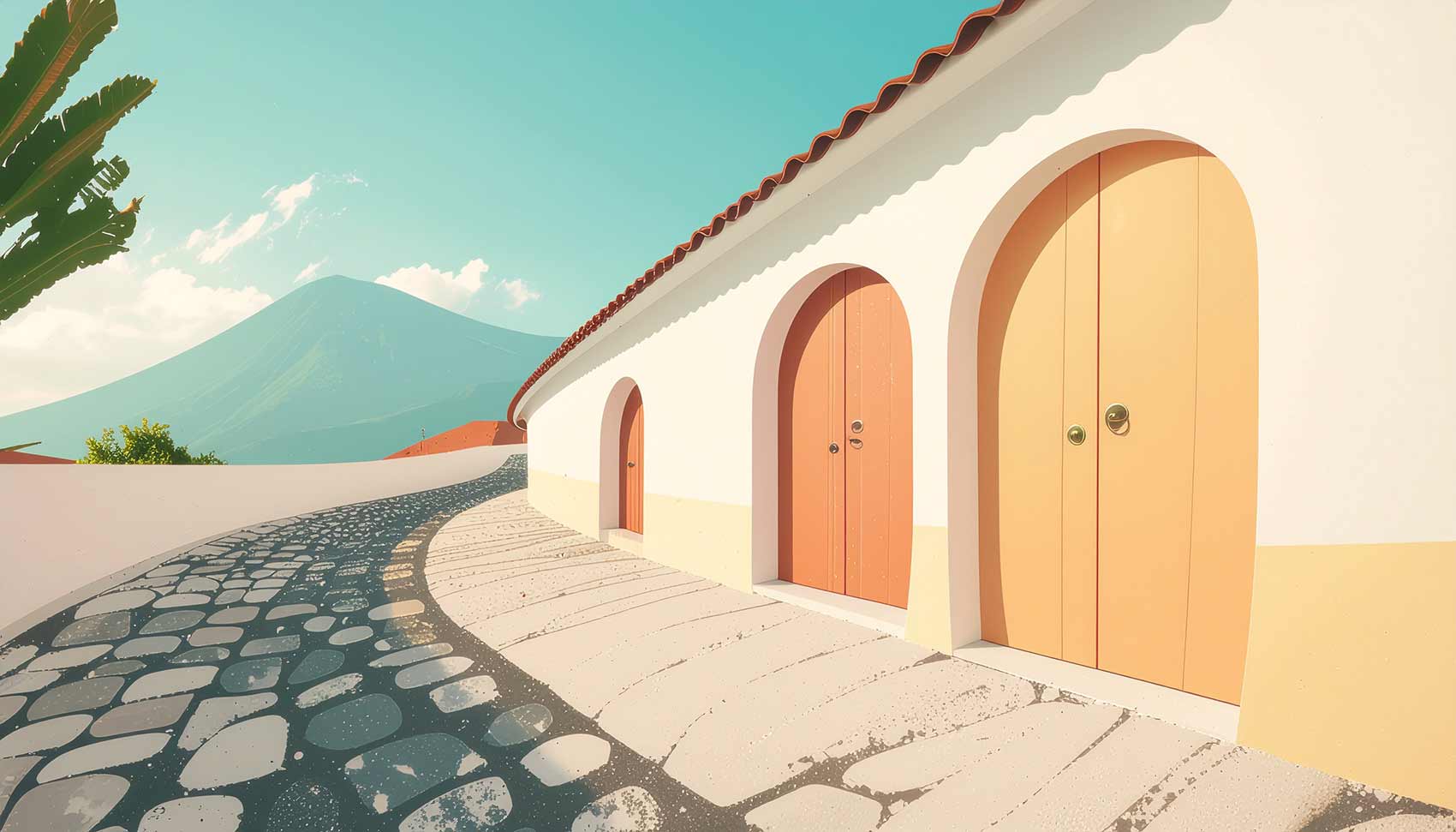
Think about it
In today’s lesson, we’re going to take a trip around the world! You’ll meet kids from three very different places — Uganda, Mexico, and Guatemala — and see what life is like for them and their families. We’ll also think about your life in America and how you can be thankful and generous, no matter how much you have.
Let’s Learn
What Does It Mean to Be Rich or Poor?
When we talk about being rich or poor, it’s easy to think just about money. But being rich can mean having clean water, a safe place to sleep, enough food to eat, and time to play and go to school. Being poor can mean worrying about where your next meal comes from, not having shoes to wear, or having to work instead of going to school.
Another word people often use to talk about how much money someone has is wealth. Wealth usually describes more than just the amount of money, though. Wealth can include the things you own, like a house or animals. Wealth can also include the opportunities you have, like education and good health. People can have wealth in different ways, not just money.
Even though some families have less money than others, they can still have strong families, happy communities, and lots of love. Let’s visit three kids and see what their lives are like.
Uganda: The Chicken Farmer’s Family
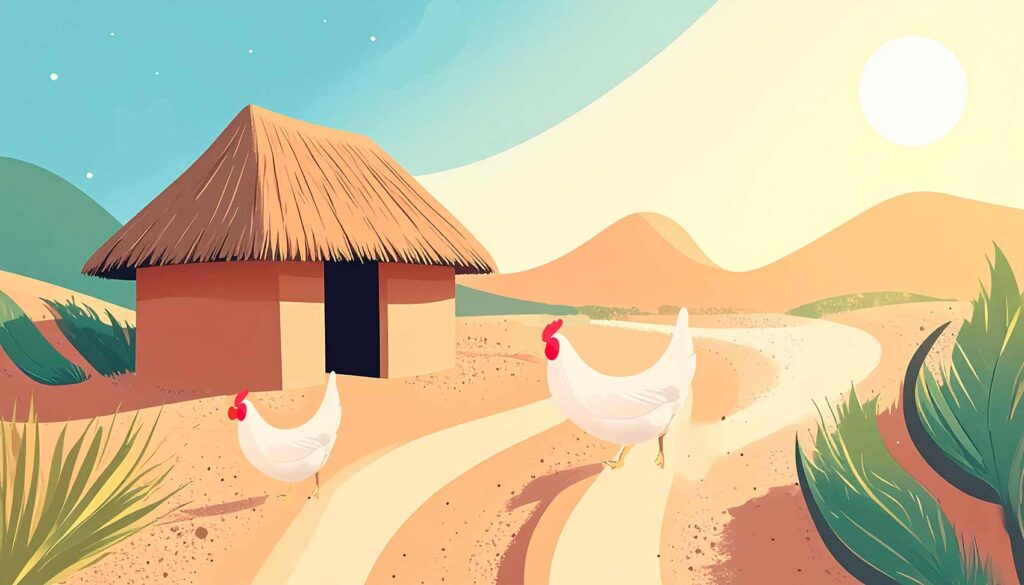
In a small, dusty village in Uganda, the sun rises at 6 a.m., and so does 11-year-old Emmanuel. His home is a mud hut with a thatched roof, and he sleeps on a woven mat next to his little brothers. His family owns a few chickens and a goat, which are some of their most valuable possessions.
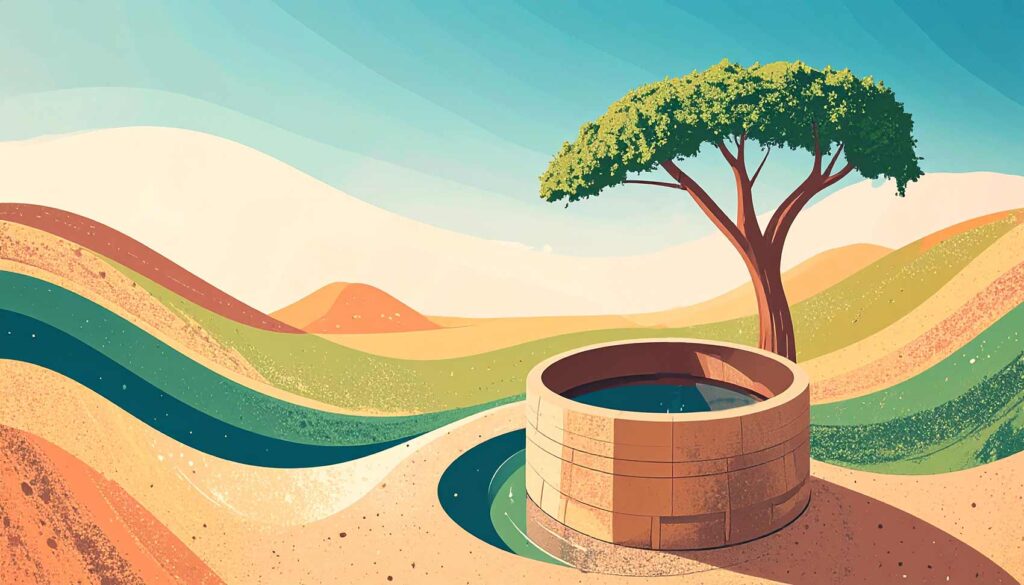
Emmanuel’s job each morning is to gather the eggs, feed the chickens, and walk to the village well to fill two big jugs of water. Then he walks a mile to school, barefoot. His school uniform is faded and patched, but he feels proud to wear it.
At lunch, he eats a simple bowl of posho (cornmeal porridge) and beans, sometimes with a banana if they’re in season. After school, he helps his father tend the little vegetable patch or repairs the chicken coop. Dinner is more beans and cassava.
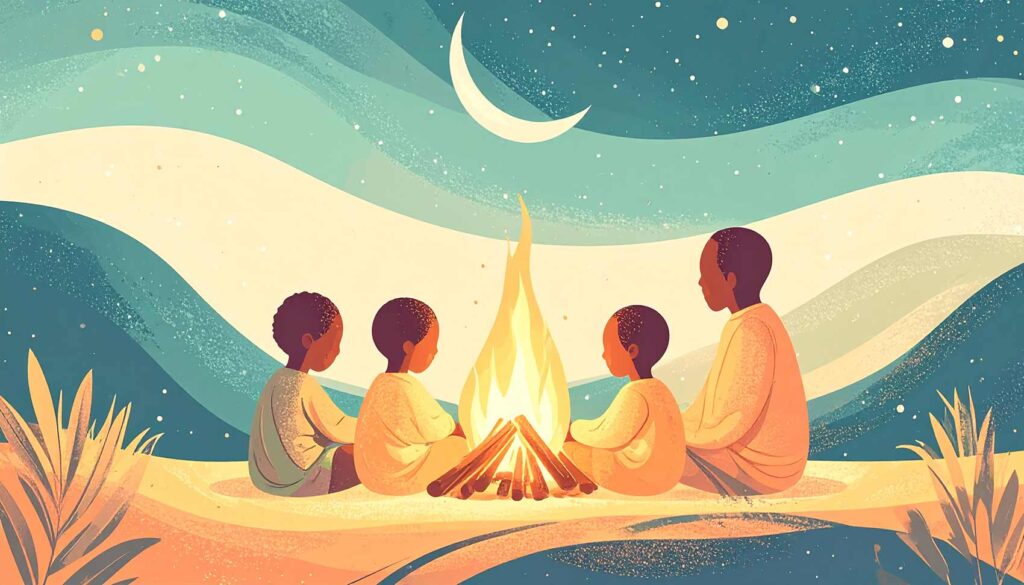
At night, there’s no electricity, so his family sits around a small fire telling stories, with the faint sound of drumming from a nearby church. He loves campfire nights with his family, and Emmanuel is thankful that he gets to go to school, even though it’s a long walk. After finishing school, he dreams of one day becoming a doctor to help sick children.
Mexico: The Market Worker’s Family
In a colorful town in southern Mexico, 10-year-old Miguel lives in a small concrete house with his parents and two sisters. Their house has electricity but no hot water, and the roof sometimes leaks during the rainy season.
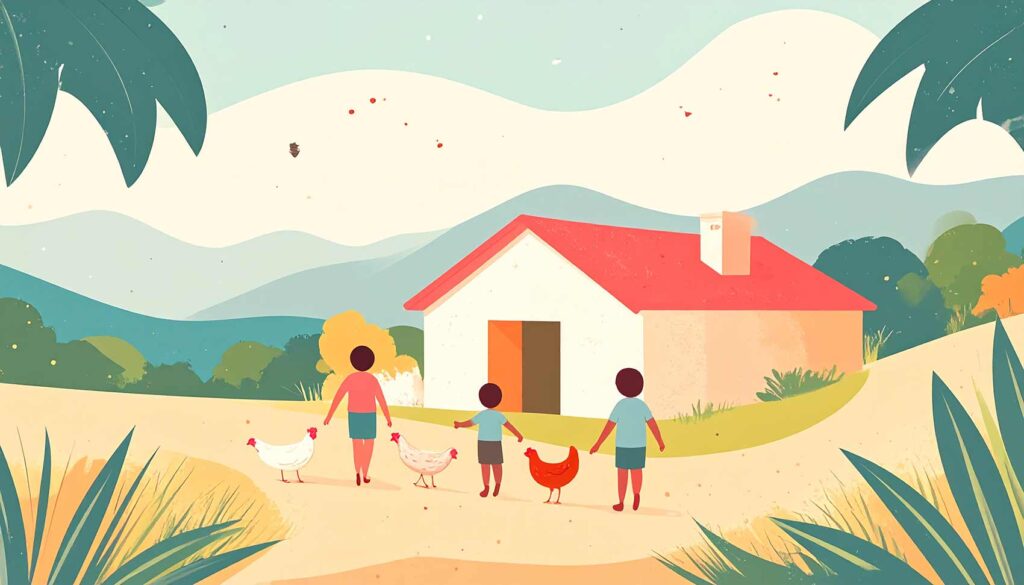
Miguel wakes up to the sound of roosters and smells of tortillas cooking on the wood stove. After a quick breakfast of beans and eggs, he helps his mother carry baskets of tomatoes, avocados, and peppers to their stall at the local market. Miguel is thankful that his mother and father work so hard to provide a safe home, food, and clothes for him and his sisters.
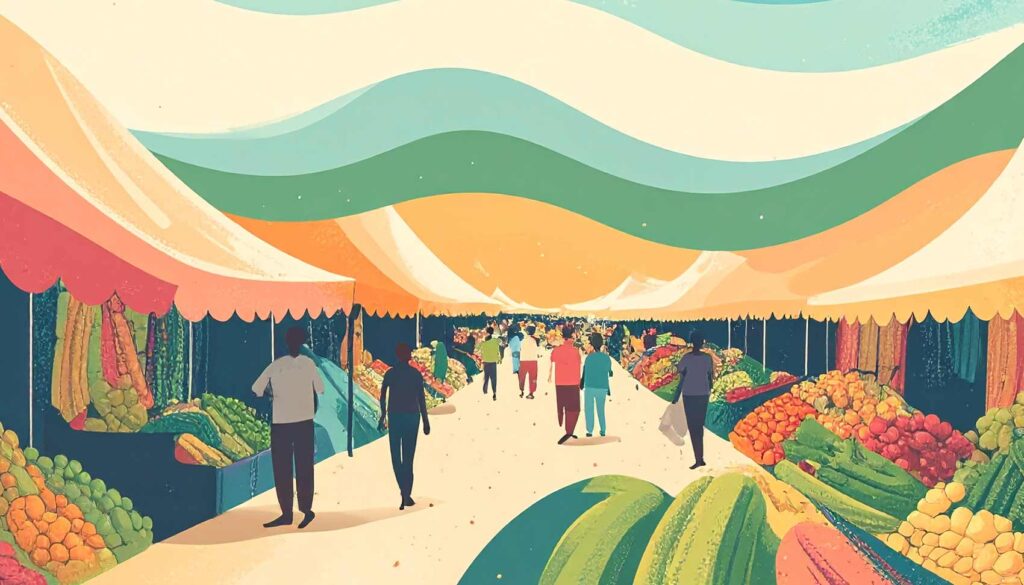
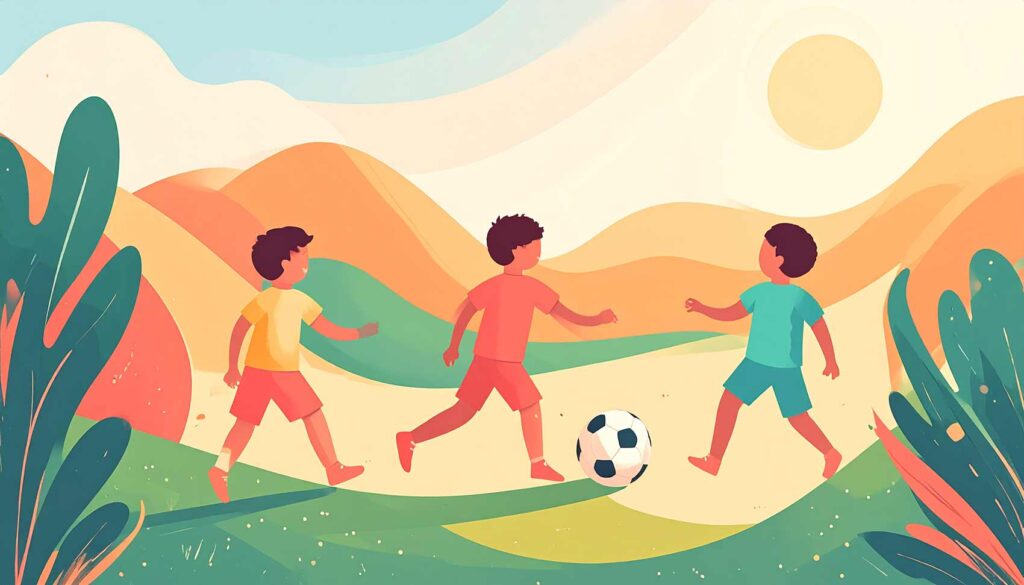
He skips school some days to help at the market, weaving through crowds to help customers and shooing away the stray dogs. At lunch, he eats tacos his mother makes on a portable griddle. In the afternoon, he runs through the streets playing soccer barefoot with his friends.
His family works hard and earns just enough to buy food for the week, but his parents are hopeful he’ll finish school and get a good job one day.
Guatemala: The Weaver’s Daughter on Lake Atitlán
In the cool morning mist by the shimmering waters of Lake Atitlán, 11-year-old Marisol wakes to the sound of roosters and church bells echoing through her little town of San Juan La Laguna. Her family’s small cinderblock house sits on a steep hillside above the lake, with flowering vines spilling down the walls.
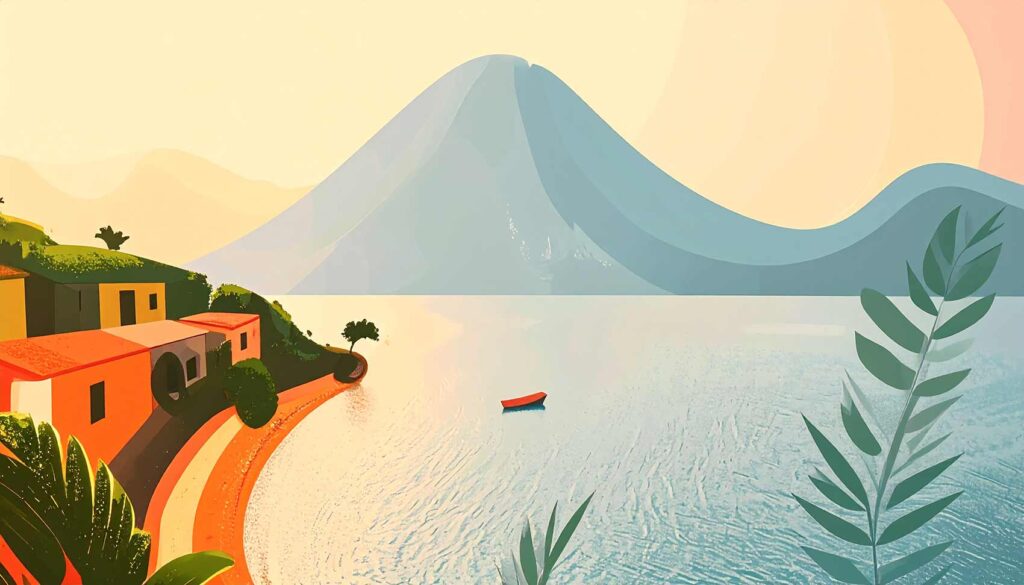
Marisol sleeps on a narrow bed, sharing her room with her younger brother. The colorful woven blanket over her bed was made by her mother, who is part of the town’s weaving cooperative.
She quickly slips into her corte — a long wrap skirt — and her huipil, a hand-embroidered blouse with bright flowers stitched into it. Her family eats a simple breakfast of black beans, corn tortillas, and a little coffee sweetened with panela sugar.
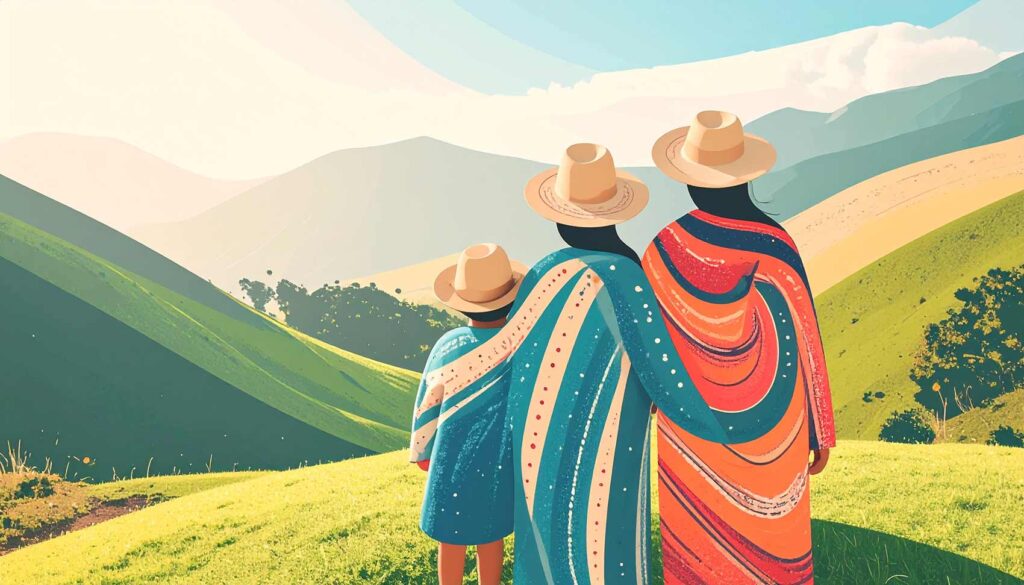
After breakfast, Marisol helps her mother set up their stall in the small artisan market. She sits on a low stool, weaving bright cotton threads into bracelets to sell to the tourists who come from all over the world to see the lake and buy handicrafts.
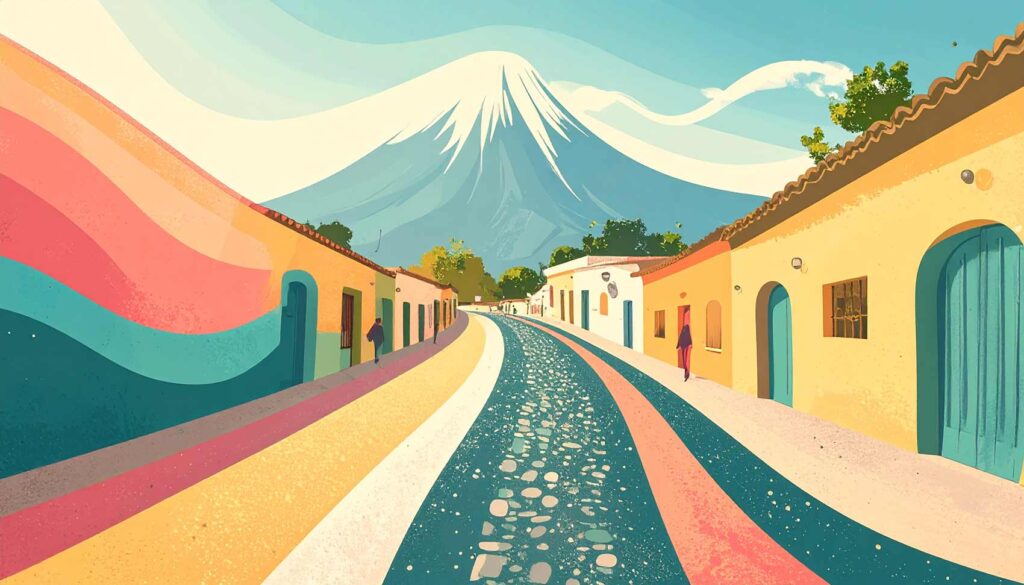
When her school day begins later in the morning, she walks with her friends down narrow cobblestone streets lined with murals. Her classroom is painted bright blue, with open windows that look out at the volcanoes across the lake.
After school, she plays hide-and-seek among the avocado trees with her brother, then helps her mother fetch water from the communal tap and grind corn for tamales.

At sunset, she sits by the lake, dipping her toes in the water, watching fishermen paddle home in their wooden canoes. Marisol is thankful for her family, friends, and the beautiful lake surrounded by volcanoes. She dreams of one day becoming a teacher in her town so she can live by the lake she loves and help her neighbors learn and grow.
Olivia in America: A Day in the Life
In a quiet suburban neighborhood, 10-year-old Olivia wakes up in her own room just as the sun peeks through her curtains. Her room is filled with books, stuffed animals, and colorful posters. She stretches in her soft bed, then heads to the kitchen where her mom is making pancakes and pouring orange juice.

After breakfast, Olivia grabs her backpack and climbs into the family’s car. Her mom drives her to school, and they pass rows of houses, busy streets, and a few stores on the way. At school, Olivia sits in a bright classroom with big windows, colorful bulletin boards, and a whiteboard. Every student has their own desk, and she even gets to use a tablet or computer during reading time.
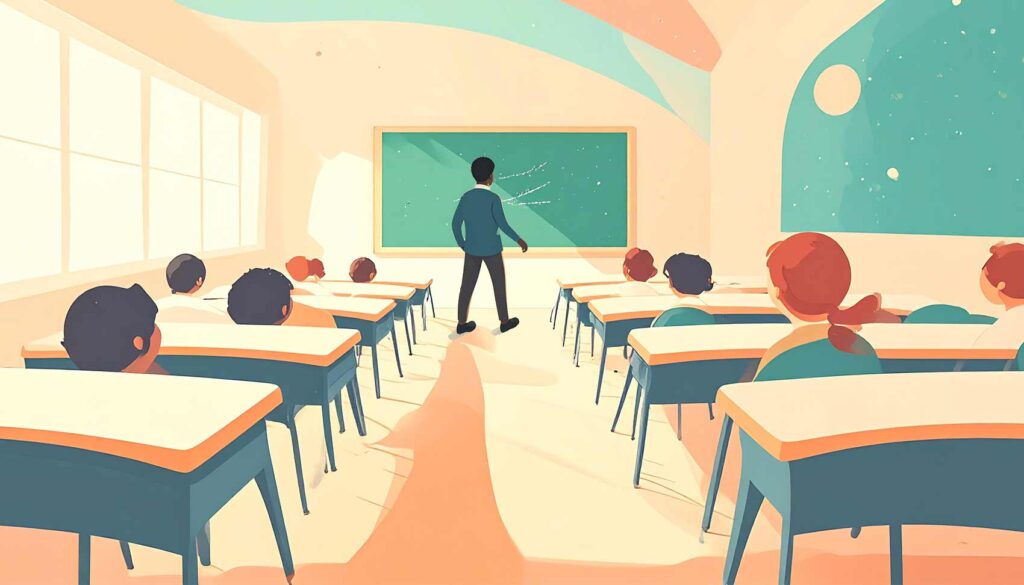
At lunch, she lines up in the cafeteria to pick out chicken nuggets, fruit, and milk. After school, she has soccer practice at the park. Her mom brings a water bottle and cheers her on from the sidelines.
In the evening, Olivia eats dinner with her family around the kitchen table. Today they’re having pasta, salad, and garlic bread. Yesterday they had tacos! Then she takes a warm shower, watches a little TV with her family, and reads a book in bed before falling asleep.
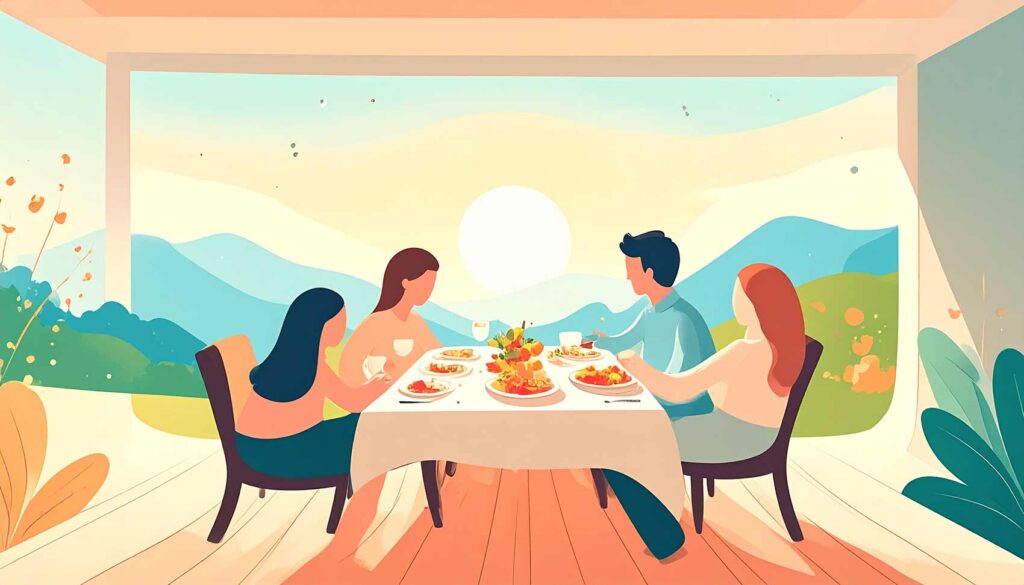
Even though she sometimes wishes for more toys or a bigger bedroom, Olivia has everything she needs — food, family, school, and time to play. And when she remembers how kids in other parts of the world live, Olivia feels thankful for what she has.
What did you notice?
Did you notice how different each of these kids’ lives are? Even though Emmanuel, Miguel, Marisol, and Olivia are all around the same age, the way they spend their days can look very different.
Some kids walk barefoot to school or have to work at the market to help their families, while others ride in a car, play sports, and have more free time. Some kids eat rice and beans every day, while others have shelves full of snacks and even choose what they want to eat for dinner. Some families have electricity, running water, and even their own bedrooms — while others all sleep in one room by candlelight.
But did you also notice some things that are the same? All of these kids help their families, play with friends, go to school (even if it looks different), and dream about the future.
And did you notice all of these kids are thankful for what they have, even though what they have in their lives is very different? When you are thankful for what you have, you are content. Being content means you don’t always feel like you need more to be happy, you can find joy right where you are, with what God has already given you.
Below is a chart to help you understand some of the common differences and similarities in family life around the world.
Comparing family life around the world
Let’s compare life for families in wealthier countries like the United States of America, with family life in less wealthy countries such as Uganda, Mexico, and Guatemala.
|
Family Life in Wealthier Countries |
Family Life in Less Wealthy Countries |
|---|---|
|
1. Families usually have their own house or apartment with electricity, running water, and heat or air conditioning. |
1. Families may live in smaller homes, shared spaces, or huts with little or no electricity or running water. |
|
2. Kids often have their own bedroom, toys, books, and sometimes even electronics like tablets or phones. |
2. Kids often share a room (or sleep on mats), have few toys, and may not own personal books or electronics. |
|
3. Families have plenty of food choices and often eat three full meals a day, plus snacks. |
3. Families may eat the same simple meal every day, sometimes only once or twice a day, and may worry about enough food. |
|
4. Kids usually go to school every day, with books, desks, and computers to help them learn. |
4. Kids may walk long distances to school, have few supplies, or even miss school to help their families work. |
|
5. Families can afford to go to doctors or hospitals when they’re sick, and have medicine available. |
5. Families may not have easy access to doctors or medicine, and have to rely on home remedies or travel far. |
|
6. Kids often play organized sports or take lessons, and have free time for hobbies and play. |
6. Kids often help with chores or work after school, and may play simple games with friends when they can. |
|
7. Parents usually have steady jobs or income, and money to buy extras like new clothes or fun trips. |
7. Parents often earn just enough for food and basic needs, with little left over for anything extra. |
|
8. Homes often have a refrigerator, stove, oven, microwave, washer, and dryer. |
8. Homes may have only a small cooking fire or stove, and no refrigerator or laundry machines. |
|
9. Families usually have at least one car or easy access to buses and trains. |
9. Families often walk or use bicycles, and sometimes ride crowded buses if they can afford it. |
|
10. Families take vacations or go out to restaurants sometimes for fun. |
10. Families rarely travel far or eat out, because it costs too much. |
Let’s Play!
Memory Game
Instructions: Click to reveal items from the stories we read and find all 6 matches.
We just Gained perspective!
Today, we gained perspective by seeing what life is like for kids in Uganda, Mexico, and Guatemala, and then comparing it to life in America. Every family’s life is unique, so these stories are just examples of the kinds of lives that are common in those countries, but not everyone’s experience is exactly the same, including your family experience. Perspective means understanding how life looks or feels like for someone else. When we looked at how kids in other parts of the world live, we gained perspective by realizing that not everyone has the same blessings and challenges we do.
Having perspective is important because it helps us appreciate what we have, understand others better, and show compassion and generosity to people who live differently than we do.
When we see the world through God’s eyes, full of love and care for everyone, it helps us to be content with what we have and have a heart that desires to help and love others.
Words to Know
Being content means being happy and thankful with what you have, instead of always wanting more.
Perspective means understanding how life looks or feels like for someone else, which can help you appreciate what you have and care more about others.
Bible Time
“I have learned to be content whatever the circumstances. I know what it is to be in need, and I know what it is to have plenty. I have learned the secret of being content in any and every situation, whether well fed or hungry, whether living in plenty or in want.“
— Philippians 4:11–12
Paul was a follower of Jesus who didn’t always have an easy life. Sometimes he was poor, hungry, and even in jail. Other times, he had more than enough. But in every situation, Paul learned to trust God, to be thankful, and to find peace, no matter what he had.
That’s what contentment means: being happy and thankful with what you have instead of always wanting more.
With Your Grown-Up
If a grown-up or parent is nearby, spend a minute to discuss one or both of these topics.
Hands On
Put learning into action! Download the activity and dive into a fun, practical way to explore today’s lesson.
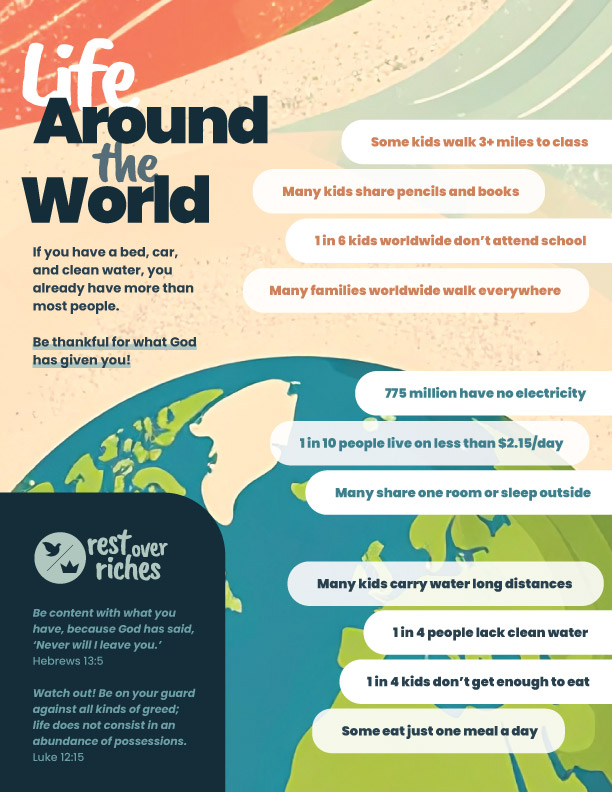
Life Around the World Poster
Here are some eye-opening facts about how families around the world live, and how money and resources are shared.
What we Learned
Kids around the world live very different lives. Some families have more money and things, and some have much less. But God wants us to be thankful for what we have, to live with contentment, and to share with others. Even though we need money to buy the things we need, and it feels good to be able to take care of ourselves, true happiness doesn’t come from money, it comes from a heart full of love, trust, and hope in God. It comes from knowing that God is right there with you as you grow up, guiding you on the amazing adventure that He created you for.
Check Your Understanding
High-Five!
Hit play for your end-of-lesson video!